Are AI Chatbots Undermining Your Child’s Critical Thinking? Expert Advice for Parents
The rise of sophisticated AI chatbots presents both opportunities and challenges for children. While these tools can be educational and engaging, concerns are growing about their potential to hinder the development of crucial critical thinking skills. Are children becoming overly reliant on AI for answers, instead of learning to analyze information and solve problems independently? Experts are weighing in, offering guidance on how parents can protect their children’s cognitive development in this rapidly evolving digital landscape. This article explores the potential pitfalls of relying too heavily on AI and provides practical strategies for fostering critical thinking in the age of artificial intelligence.
The Allure of AI Chatbots for Kids
AI chatbots are becoming increasingly popular among children. Their interactive nature, ability to provide instant answers, and capacity to generate creative content make them appealing learning tools and sources of entertainment. From homework help to storytelling, AI appears to offer limitless possibilities. But this easy access to information and solutions comes with a potential downside.
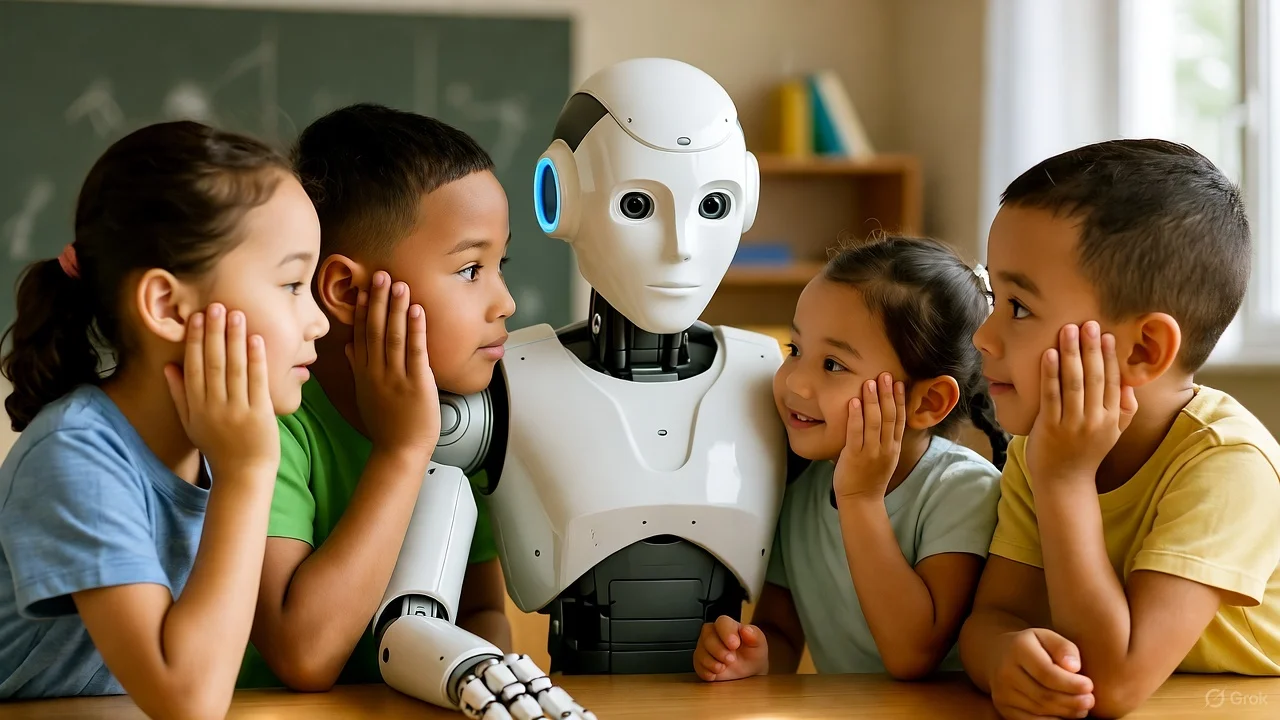
Children are naturally curious, but the immediacy of AI responses might discourage them from engaging in the deeper cognitive processes necessary for true learning. Instead of wrestling with a problem, researching different sources, and formulating their own conclusions, they may simply accept the chatbot’s answer as fact, stunting the development of essential analytical abilities.
The Risk of Critical Thinking Offloading
The primary concern is the potential for children to “offload” their critical thinking skills to AI. Critical thinking involves analyzing information objectively, evaluating arguments, identifying biases, and forming reasoned judgments. It’s a fundamental skill necessary for success in academics, careers, and life in general.
When children rely on AI chatbots for answers without questioning the source, considering alternative perspectives, or evaluating the logic behind the response, they risk becoming passive recipients of information. This can lead to a decline in their ability to think critically, solve problems creatively, and make informed decisions. This article on AI in Education: Preparing Students for an AI-Driven World emphasizes the importance of combining AI with existing educational frameworks.
Distinguishing Fact from Fiction
One of the biggest challenges with AI chatbots is their potential to generate inaccurate or biased information. While these tools are trained on vast amounts of data, they are not infallible. They can sometimes produce responses that are factually incorrect, misleading, or reflect the biases present in their training data.
Children, who are still developing their critical thinking skills, may not be able to distinguish between reliable and unreliable information provided by AI. This can lead them to accept false claims as truth, develop a distorted understanding of the world, and become more susceptible to misinformation and propaganda.
Strategies for Protecting Your Child’s Critical Thinking
Fortunately, there are steps parents can take to mitigate the risks and ensure that their children develop strong critical thinking skills, even in the age of AI.
Encourage Questioning: Foster a culture of curiosity and questioning at home. Encourage your children to ask “why” and “how” about everything they encounter, including information provided by AI. Prompt them to consider different perspectives and challenge assumptions.
Promote Active Learning: Emphasize the importance of active learning techniques, such as researching, experimenting, and problem-solving. Encourage your children to explore topics in depth, consult multiple sources, and form their own conclusions.
Teach Media Literacy: Educate your children about media literacy and how to evaluate the credibility of information sources. Teach them to identify bias, look for evidence, and distinguish between fact and opinion.
Limit Screen Time: Excessive screen time can negatively impact cognitive development, including critical thinking skills. Set healthy limits on your children’s screen time and encourage them to engage in other activities that promote critical thinking, such as reading, playing games, and engaging in real-world experiences.
Model Critical Thinking: Demonstrate critical thinking skills in your own life. Talk aloud about how you evaluate information, make decisions, and solve problems. This will provide a valuable example for your children to follow.
Use AI as a Tool, Not a Crutch: Frame AI chatbots as tools to enhance learning, not replace it. Encourage your children to use AI to explore topics, generate ideas, and access information, but always emphasize the importance of independent thinking and analysis. AI can also be used to help with efficiency in other sectors, check out AI Agents: Revolutionizing Business Operations and Efficiency for other ways AI can be utilized.
Engage in Discussions: Have regular conversations with your children about the information they are encountering online, including what they learn from AI chatbots. Discuss the potential biases, limitations, and ethical implications of AI.
The Role of Education
Schools also play a vital role in fostering critical thinking skills in the age of AI. Educators need to adapt their teaching methods to equip students with the skills necessary to navigate the digital world effectively. This includes:
Integrating Critical Thinking into the Curriculum: Explicitly teach critical thinking skills across all subjects. Emphasize analysis, evaluation, and problem-solving.
Promoting Inquiry-Based Learning: Encourage students to ask questions, explore topics independently, and form their own conclusions.
Teaching Media Literacy: Educate students about media literacy and how to evaluate the credibility of information sources.
Using AI as a Learning Tool: Integrate AI into the classroom in a way that enhances learning and promotes critical thinking. For example, use AI chatbots to generate different perspectives on a topic or to challenge students’ assumptions.
Fostering Collaboration: Encourage collaboration and discussion among students. This can help them to learn from each other, challenge their own thinking, and develop stronger critical thinking skills.
Adapting to the evolving role of the teacher: Teachers must become facilitators of knowledge rather than sole providers. They should guide students in navigating AI tools while emphasizing human values and ethical considerations.
The Future of Critical Thinking in an AI-Driven World
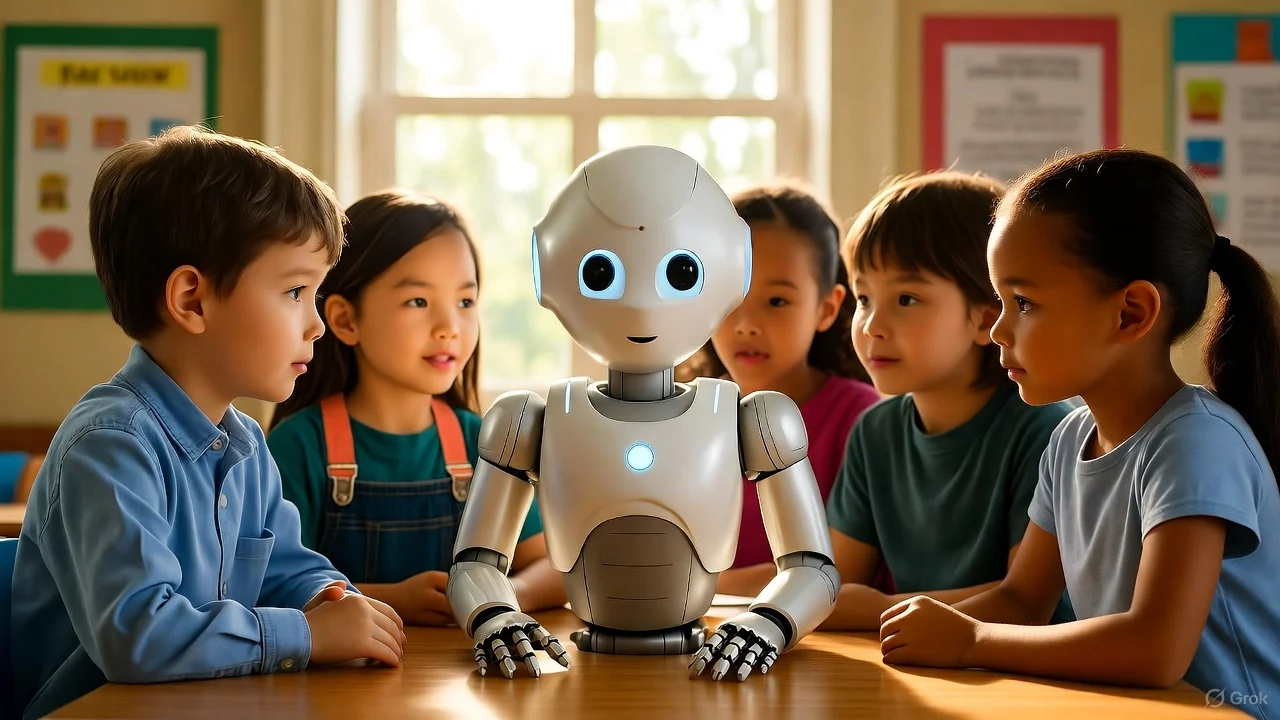
As AI continues to evolve and become more integrated into our lives, it’s crucial to prioritize the development of critical thinking skills. The ability to analyze information, evaluate arguments, and form reasoned judgments will be more important than ever in an AI-driven world. The development of these skills must be approached with the same vigor as the rise of AI, this can be seen in Student-Led AI Policy: Shaping the Future of Education.
By fostering a culture of curiosity, promoting active learning, teaching media literacy, and using AI as a tool, not a crutch, parents and educators can help children develop the critical thinking skills they need to thrive in the 21st century. We must ensure that children are not simply passive recipients of information, but active, engaged thinkers who can make informed decisions and contribute meaningfully to society.
In conclusion, while AI chatbots offer many potential benefits for children, it’s essential to be aware of the risks they pose to the development of critical thinking skills. By taking proactive steps to foster critical thinking and media literacy, parents and educators can ensure that children are well-equipped to navigate the challenges and opportunities of an AI-driven world. The key is to strike a balance between leveraging the power of AI and nurturing the essential cognitive abilities that will enable children to become independent, informed, and successful individuals.