
AI’s Growing Impact: Over 10,000 Job Cuts in 2025 Amidst Shifting Economic Landscape
Update for 2026: The trend accelerated fast. AI-cited layoffs hit 87,714 in just the first five months of 2026, already exceeding the 54,836 recorded across all of 2025, according to Challenger, Gray & Christmas. By June, AI had become the #1 cited reason for job cuts nationwide.
The United States job market is undergoing a significant transformation, with artificial intelligence emerging as a potent force driving considerable workforce adjustments. As of the first seven months of 2025, generative AI adoption alone has been linked to over 10,000 job cuts, according to a recent report. This trend places AI among the top five factors contributing to job losses this year, signaling a new era where technological advancement directly influences employment.
The broader labor market has experienced a notable slowdown, with employers adding only 73,000 jobs in July, falling significantly short of projections. This data, coupled with escalating layoff announcements, fuels concerns about a potential hiring freeze. Through July, private sector companies have announced a staggering 806,000 job cuts, the highest number recorded for this period since 2020. The technology sector, in particular, has been at the forefront of these reductions, with over 89,000 job cuts announced, a 36% increase from the previous year. Since 2023, an estimated 27,000 job losses have been directly attributed to the proliferation of AI technologies.
Andrew Challenger, senior vice president at Challenger, Gray & Christmas, the firm behind the report, notes that the industry is being “reshaped by the advancement of artificial intelligence and ongoing uncertainty surrounding work visas.” While AI’s influence on the workforce is palpable, other economic pressures are also exerting immediate pressure. Significant government efficiency initiatives have led to over 292,000 job eliminations, impacting various sectors beyond direct government employment. Furthermore, the retail sector is grappling with rising tariffs and economic uncertainty, leading to an almost 250% surge in announced layoffs compared to the same period last year, with over 80,000 positions eliminated.
The ramifications of these shifts are particularly pronounced for emerging talent. Job listings for entry-level corporate positions, traditionally a gateway for recent graduates, have seen a 15% decline. Concurrently, employers are increasingly incorporating “AI” into their job descriptions, indicating a growing demand for AI-specific skills and a potential shift in the skill sets required for future roles. This evolving landscape underscores the critical need for individuals and organizations to adapt to the accelerating integration of AI in the workplace.
The Accelerating Influence of AI on Job Displacement
The year 2025 has marked a significant inflection point in the labor market, with artificial intelligence clearly identified as a primary driver of job displacement. The comprehensive report from Challenger, Gray & Christmas highlights that generative AI, a subset of artificial intelligence capable of creating new content such as text, images, and code, has directly contributed to over 10,000 job cuts in the first seven months of the year. This figure is not merely a statistic; it represents thousands of individuals whose roles have been directly impacted by the increasing sophistication and adoption of AI technologies across various industries.
The implications of this trend are far-reaching. As businesses across sectors embrace AI for automation, efficiency gains, and enhanced capabilities, the nature of work is being fundamentally altered. Tasks that were once labor-intensive and human-driven are now being streamlined or entirely taken over by AI systems. This is particularly evident in fields involving data analysis, customer service, content creation, and even certain aspects of software development. The speed at which AI is being integrated suggests that this trend is not a temporary anomaly but a sustained shift in the employment landscape.
The report categorizes AI as one of the top five factors contributing to job losses in 2025. This places AI alongside other significant economic forces, such as global trade tensions, economic downturns, and shifts in consumer demand. However, AI’s unique characteristic lies in its potential to disrupt industries at an unprecedented pace. Unlike traditional automation, which often focused on repetitive physical tasks, AI can tackle complex cognitive functions, making its impact more pervasive and potentially affecting a broader range of white-collar professions.
The technology sector, often an early adopter of new innovations, has predictably seen some of the most significant impacts. With over 89,000 job cuts announced within this sector, a 36% increase from the previous year, it’s clear that even the companies at the forefront of technological development are navigating these changes. These layoffs aren’t necessarily indicative of a company’s failure but rather a strategic realignment in response to AI’s capabilities. Some roles might be eliminated, while others are redefined to work alongside AI tools, requiring new skill sets focused on AI management, oversight, and strategic application. Since 2023, an estimated 27,000 job losses are directly linked to the advent of AI, underscoring its escalating influence. This number is expected to grow as AI capabilities continue to expand and become more accessible to businesses of all sizes.
The Broader Economic Context: Layoffs and Hiring Slowdowns
While the influence of AI on job cuts is a significant and growing concern, it is crucial to understand this trend within the broader context of the current U.S. labor market. The overall picture reveals a slowdown in hiring and a substantial increase in overall job eliminations, indicating a complex economic environment. The U.S. job market has been showing strain due to various factors, and the rise of AI is now a prominent addition to this list.
The latest labor data from July paints a concerning picture: employers added only 73,000 jobs, a figure that fell considerably short of analyst forecasts. This deceleration in job creation is a key indicator that the robust hiring seen in previous periods may be coming to an end. When combined with the surge in announced layoffs, the situation suggests a potential economic recalibration. Through July of 2025, private sector companies had announced over 806,000 job cuts. This number represents the highest total for this period since 2020, a year heavily impacted by the initial onset of the COVID-19 pandemic and the subsequent economic shockwaves.
The confluence of reduced hiring and increased layoffs creates a challenging environment for job seekers. It suggests that companies are not only cutting back on current staff but are also becoming more cautious about expanding their workforce. This cautiousness can stem from a variety of reasons, including economic uncertainty, rising operational costs, and the strategic integration of new technologies like AI that can alter workforce needs.
The Challenger, Gray & Christmas report provides valuable insights by categorizing the reasons behind these workforce reductions. While AI is a notable factor, other significant contributors include:
- Government Efficiency Initiatives: Spearheaded by initiatives like the Department of Government Efficiency (DOGE), aimed at reducing federal spending, these efforts have led to the elimination of over 292,000 positions. Andrew Challenger emphasized that these budget cuts are impacting not only government agencies but also non-profits and the healthcare sector, demonstrating the ripple effect of fiscal policy on employment.
- Retail Sector Challenges: The retail industry is facing significant headwinds, including rising tariffs, inflation, and general economic uncertainty. This has resulted in over 80,000 announced layoffs through July, an increase of nearly 250% compared to the same period last year. Further declines in consumer spending are anticipated to exacerbate these losses, potentially leading to additional job cuts and store closures.
- Ongoing Uncertainty: Broader economic uncertainties, including geopolitical events, supply chain disruptions, and evolving consumer behavior, also play a role in companies’ decisions to reduce their workforce or scale back hiring plans.
Understanding these interconnected factors is crucial for a comprehensive view of the job market. AI is a powerful disruptor, but its impact is intertwined with the prevailing economic conditions and policy decisions.
The Shifting Landscape for Entry-Level and Young Workers
The escalating integration of AI and the broader economic recalibration are having a disproportionately significant impact on entry-level positions and the younger workforce. Traditionally, these roles have served as crucial stepping stones for recent college graduates and young professionals entering the job market. However, the dynamics are visibly changing, presenting new challenges for this demographic.
Career platforms like Handshake, which cater specifically to Gen Z employees and recent graduates, have observed a marked decline in job listings for the types of entry-level corporate roles that have historically been available. Over the past year, these listings have decreased by approximately 15%. This reduction signifies a tightening of opportunities at the very beginning of many career paths. For individuals fresh out of academia, this can mean increased competition for fewer roles, longer job searches, and potentially a need to recalibrate career aspirations or acquire new skills immediately upon graduation.
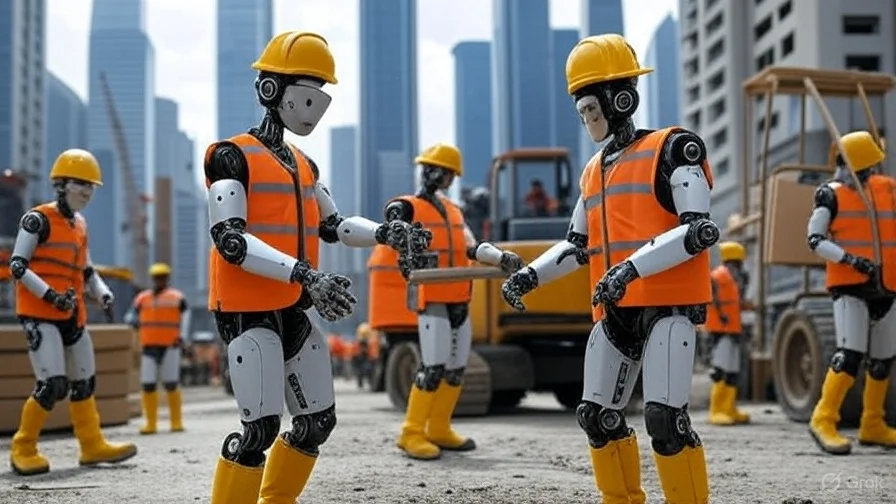
The increase in employers mentioning “AI” in job descriptions is a telling statistic. Over the past two years, there has been a staggering 400% surge in employers incorporating AI-related keywords into their postings. This trend indicates a fundamental shift in the skills employers are seeking. It suggests that even for entry-level positions, there is an emerging expectation that candidates will have at least some familiarity with AI tools, concepts, or a willingness to learn and adapt to AI-integrated workflows.
This doesn’t necessarily mean that all entry-level jobs are disappearing. Instead, the nature of these roles is likely evolving. Companies may be looking for individuals who can leverage AI tools to enhance their productivity, analyze data generated by AI, or manage AI-powered systems. This requires a workforce that is not only technically adept but also adaptable and possesses strong problem-solving and critical thinking skills.
The implications for educational institutions and career development programs are profound. There is a growing need to ensure that curricula are updated to reflect the current demands of the job market, emphasizing digital literacy, data analysis, and an understanding of AI principles. Furthermore, career services should proactively guide students towards developing skills that complement AI, rather than compete directly with it. This might involve focusing on roles that require human creativity, complex emotional intelligence, strategic decision-making, and interpersonal skills – areas where AI currently has limitations.
The rise of AI-powered tools for various tasks, such as content generation or preliminary data analysis, means that roles heavily reliant on these specific functions might be more susceptible to automation or augmentation. However, this also opens up new avenues. For instance, understanding how to effectively prompt and utilize generative AI tools, like those explored in Gemini AI Prompts: Unlock Its Full Potential Now!, is becoming a valuable skill. Similarly, the development of sophisticated AI image generators, such as ByteDance Seedream 4.0: The Next-Gen AI Image Generator Challenging Giants, demonstrates the rapidly evolving creative landscape where human oversight and creative direction remain paramount.
AI and the Future of Work: Adaptation and Opportunity
The narrative surrounding AI and job cuts can often evoke a sense of apprehension. However, it’s crucial to acknowledge that technological advancements, while disruptive, also create new opportunities and reshape industries in ways that can lead to innovation and growth. The current job market dynamics, including the influence of AI, are not simply about elimination but about transformation.
The increasing adoption of AI technologies is a clear signal of a paradigm shift in how work is performed. Companies are investing in AI not just to reduce costs but to enhance their capabilities, improve decision-making, and unlock new avenues for product and service development. This drive for innovation necessitates a workforce that can effectively integrate and manage these powerful tools.
For individuals, this evolution underscores the importance of lifelong learning and adaptability. The skills that were in demand a decade ago may not be as relevant today, and the skills crucial for tomorrow are still being defined. Embracing AI as a collaborative partner rather than a direct competitor is key. This involves understanding its strengths and weaknesses, learning how to leverage its capabilities, and focusing on developing uniquely human skills that AI cannot replicate.
Consider the field of product management. AI-Driven Product Management: Master Your Strategy and Boost Outcomes showcases how AI is revolutionizing the way products are developed, marketed, and iterated upon. AI tools can assist in market research, user feedback analysis, and even the generation of product roadmaps. This doesn’t eliminate the need for product managers; rather, it elevates their role, allowing them to focus on strategic vision, customer empathy, and complex problem-solving, supported by AI-driven insights. Similarly, 9 Essential AI Tools Revolutionizing Product Management Productivity illustrates the tangible benefits AI brings to professionals looking to optimize their workflows.
The realm of creative asset generation is also being transformed. While AI can now generate compelling visuals, the demand for human creativity, artistic direction, and strategic branding remains. Tools like Google AI Asset Studio: Revolutionizing Creative Asset Generation can expedite the process, but the ultimate vision and refinement still rely on human input. This creates opportunities for graphic designers, marketers, and content creators to collaborate with AI, enhancing their output and exploring new creative possibilities.
Furthermore, AI is being deployed in critical areas like consumer protection. As highlighted in Arming Consumer Regulators: How AI is Revolutionizing Product Safety, AI is proving invaluable in identifying potential safety hazards and ensuring products meet regulatory standards, thus creating specialized roles in AI governance and compliance.
The global adoption of AI is also influencing governance. The appointment of an AI minister in countries like Albania, as seen with Albania Appoints AI Minister: Diella’s Historic Leap into Governance, signals a proactive approach to integrating AI into public policy and administration, potentially creating new career paths in digital governance and AI ethics.
Even established industries are finding new avenues for growth through AI. Tesla’s strategic maneuvering, as discussed in Tesla’s AI & Energy Surge: Navigating EV Headwinds for Future Growth, demonstrates how AI is integral to their vision of sustainable energy and advanced transportation, creating demand for specialized engineering and AI development roles.
The key takeaway is that the AI revolution is not just about job losses; it’s about a profound restructuring of the workforce. Individuals and organizations that embrace continuous learning, adapt to new technological paradigms, and focus on developing uniquely human capabilities will be best positioned to thrive in this evolving landscape. The future of work will likely be a collaboration between human ingenuity and artificial intelligence, leading to unprecedented advancements and opportunities.


One thought on “AI Job Cuts in 2026: Why Layoffs Already Beat All of 2025 Combined”